ASPAR · LOGISTICS
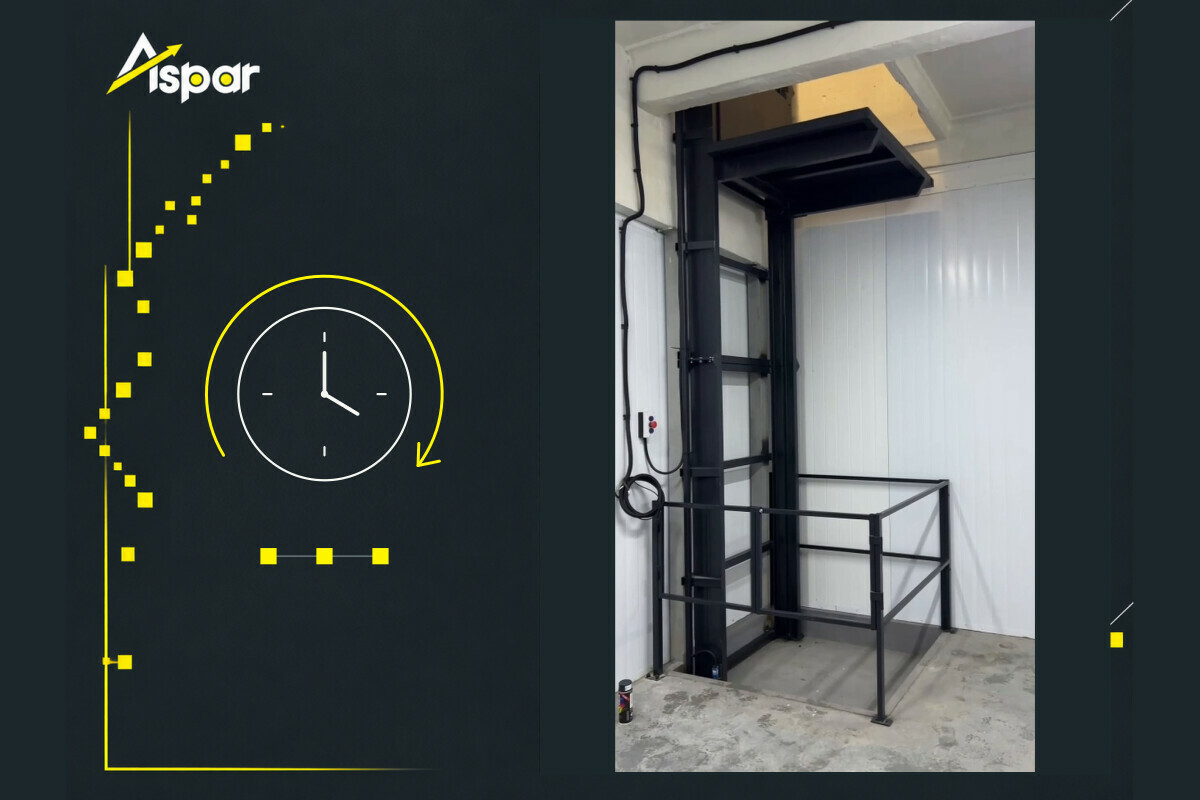
Pallets are ready to go, an employee is waiting on another floor, and the lift is still returning. The load is within the weight limit, but the warehouse cannot move the required number of batches. To understand why, measure the full cycle: from being ready to accept a load to being ready for the next one in the same position.
Call ASPAR+38 066 307 58 87
Rated load and throughput
Rated load defines the equipment's permitted loading. Throughput describes how many load units the system can move over a given period under specific operating conditions. For a warehouse, pallets, trolleys or batches per hour are useful measures when these are the units that organise the flow.
Increasing the weight limit does not necessarily increase the number of dispatches. A platform may only accommodate one trolley even with plenty of spare weight capacity. Carrying two pallets per trip does not automatically double throughput either: both need to be brought over, positioned and collected. The calculation must reflect actual dimensions, total loading and the permitted loading arrangement.
Where the cycle starts and ends
For a simple route between two levels with an empty return, choose a consistent starting point: the platform is at the lower level, access is open, and loading can begin. The cycle ends when the platform returns to that same state after delivery.
Record each stage in sequence:
- loading and positioning the goods correctly;
- closing access and completing the system's required readiness checks;
- travelling to the destination level and opening access;
- waiting for an employee, unloading and clearing the platform;
- closing access, returning empty and preparing for the next load.
Count each time segment once. If the next pallet is brought over while the lift is travelling, do not simply add those durations together. However, a delay that leaves a ready platform waiting for goods increases the actual interval between dispatches.
Reduce cycle time through better organisation, not by bypassing safeguards or rushing loading. In its loading guidance, the UK Health and Safety Executive recommends separating loading areas from unrelated traffic and agreeing procedures in advance. This is a useful planning principle, rather than a substitute for the requirements applying to a particular Ukrainian site.
A hypothetical calculation: why travel speed is only part of the answer
Suppose one batch occupies the platform. Loading takes 60 seconds; all access and readiness operations across the cycle take 30 seconds in total; upward travel takes 40 seconds; unloading takes 70 seconds; and the return takes 40 seconds. There is no waiting for staff in this example.
The full cycle is 60 + 30 + 40 + 70 + 40 = 240 seconds, or 4 minutes. Repeated continuously, this corresponds to 15 batches per hour: 3600 / 240 = 15.
These figures are entirely hypothetical. They are an explanatory model, not ASPAR equipment specifications, a permitted duty cycle or a performance promise. Actual operation depends on the documentation for the particular lift and the way work is organised, among other factors.
If only the travel time in both directions were hypothetically halved, the cycle would take 200 seconds. Calculated throughput would rise to 18 batches per hour, rather than 30. Most of the time in this example is spent handling goods at the levels. Check these operations before concluding that a faster lift is needed.
Check peak arrivals, not the shift average
An average of 10 batches per hour can conceal 10 batches arriving within the first 20 minutes. With the hypothetical four-minute cycle, only five complete cycles can finish in that period. The remaining batches still need to be handled, even if no more arrive afterwards.
Record when each request arrives, when loading starts and when the transfer finishes. Compare normal and busiest periods. Look at the largest queue, waiting time and when the backlog clears. A calculation with no spare time is vulnerable to uneven arrivals, but there is no universal reserve percentage for every warehouse.
Staff, return loads and multiple floors
If one person serves both levels, their movement via an authorised route can delay unloading. Do not assume an employee can ride a goods lift unless its documentation permits that use. Separate staff at each level change how the cycle works, but they need an agreed handover procedure.
A return load can make the return journey productive, but it adds loading and unloading operations. For multiple floors, a single cycle is not enough: describe the routes, request frequency, intermediate stops and service order separately. Do not assume automatic call prioritisation without checking the control system.
What to share with ASPAR
Prepare a short operations log: request time, route, number and dimensions of load units, duration of each stage and reason for any delay. Add how staff work and the busiest arrival pattern. General project inputs are covered in our guide to planning a warehouse goods lift.
ASPAR solves lifting and movement challenges. Assess the complete goods-transfer process alongside the equipment configuration. Explore our warehouse and logistics solutions and describe exactly where the queue develops.
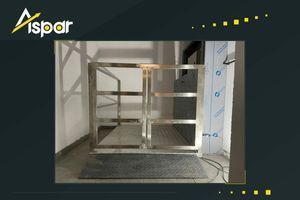
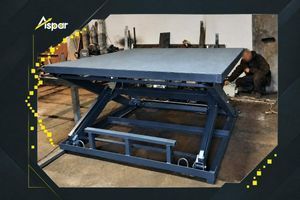
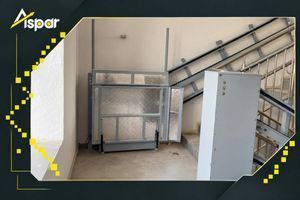
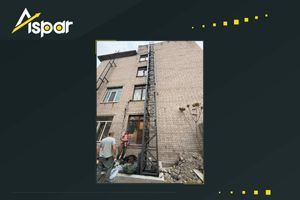
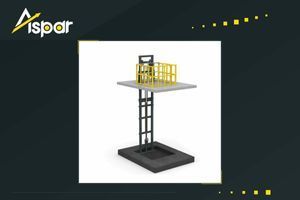
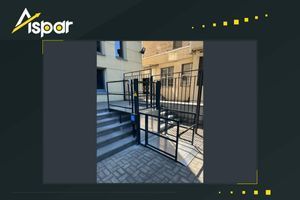
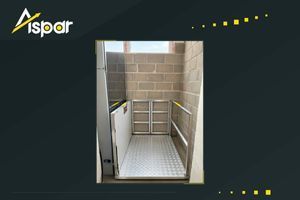
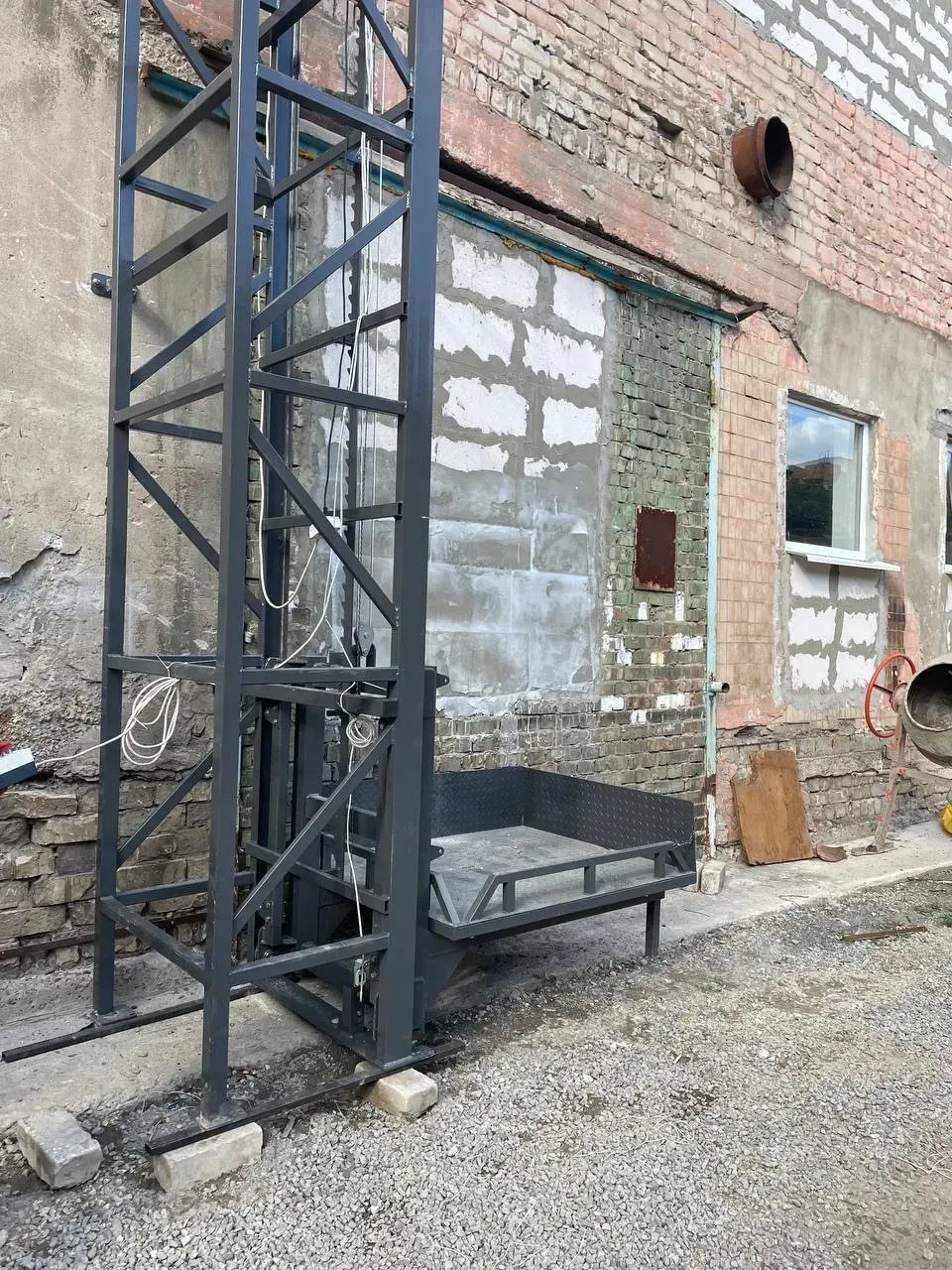
Compare equipment configurations in our vertical goods lift range. Our external warehouse lift project in Dnipro illustrates a dedicated route between two levels. It is a layout example, not evidence for the hypothetical cycle time above.
Frequently asked questions
Can throughput be determined from rated load alone?
No. You also need the units carried per trip, full cycle time, arrival pattern and the equipment's permitted operating duty.
Should an empty return be included?
Yes, if the next dispatch cannot start without it. Routes carrying return loads require a separate scenario.
What should be measured first if a queue already exists?
Record request arrivals and the duration of each cycle stage separately during the peak period. This helps distinguish a throughput shortfall from delays in bringing goods to the lift or collecting them.
Further reading: HSE guidance on loading and unloading.
Discuss your goods flow
Describe the route, load and operation times. We can identify the inputs needed to work through your lifting challenge.
Call ASPAR+38 066 307 58 87