
SOLUTIONS FOR HOSPITALS
Platform lifts for hospitals
For hospitals, ASPAR considers two distinct tasks: an accessible route for visitors and wheelchair users, using vertical or inclined platforms; and inter-level movement of patients and stretchers, using hospital lifts. The equipment type is determined by the route, height, space, use scenario and building conditions. Equipment does not automatically establish accessibility compliance of the entire medical facility.
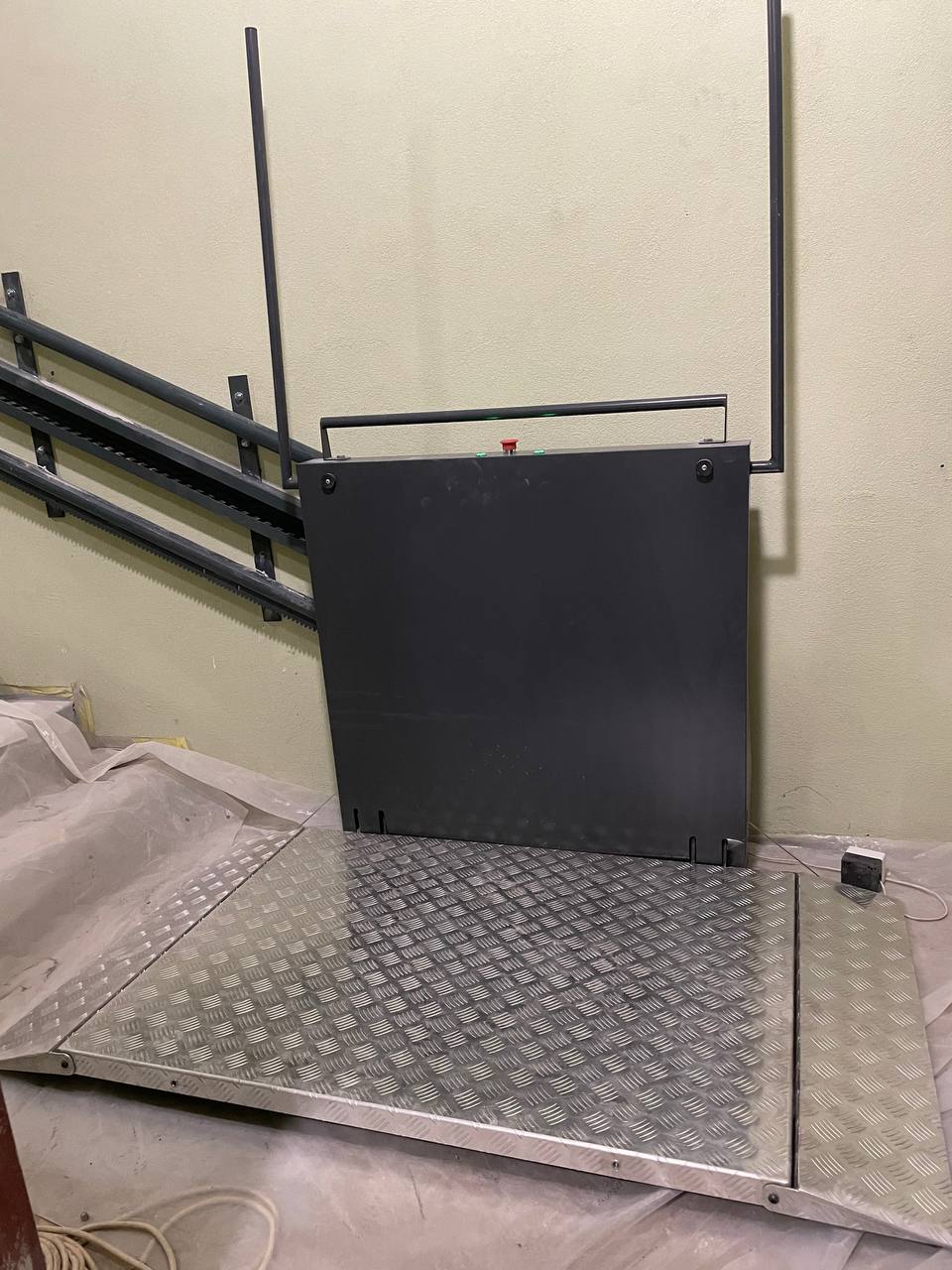
Where a solution may be needed
The route is checked from the entrance point to the required functional area.
Entrance
Overcoming stairs or a level difference before the entrance.
Internal levels
A separate solution for a route between building levels.
Route to a shelter
Review of stairs, landings and the complete accessible route.
The task ASPAR solves
ASPAR reviews the area and route, geometry, level difference, landings, entry direction, indoor or outdoor conditions and building constraints. For patient and stretcher movement, ASPAR considers hospital lifts according to the route, dimensions, number of levels and site conditions. Hospital lifts for stretchers are used when a project requires inter-floor patient movement.
Recommended solution types
Vertical platforms
For a level difference where a suitable vertical zone is available.
Learn moreInclined platforms
For travel along a stair flight after its geometry is checked.
Learn moreCustom solutions
For complex conditions where a standard layout is unsuitable.
Learn moreWhat determines the selection
Provide actual route data; parameters from another medical facility are not a ready-made configuration.
- area and complete route
- level difference or stair flight
- landings and entry direction
- indoor or outdoor conditions
- photos, video or a plan
- building constraints and responsible contact
Medical-facility equipment example
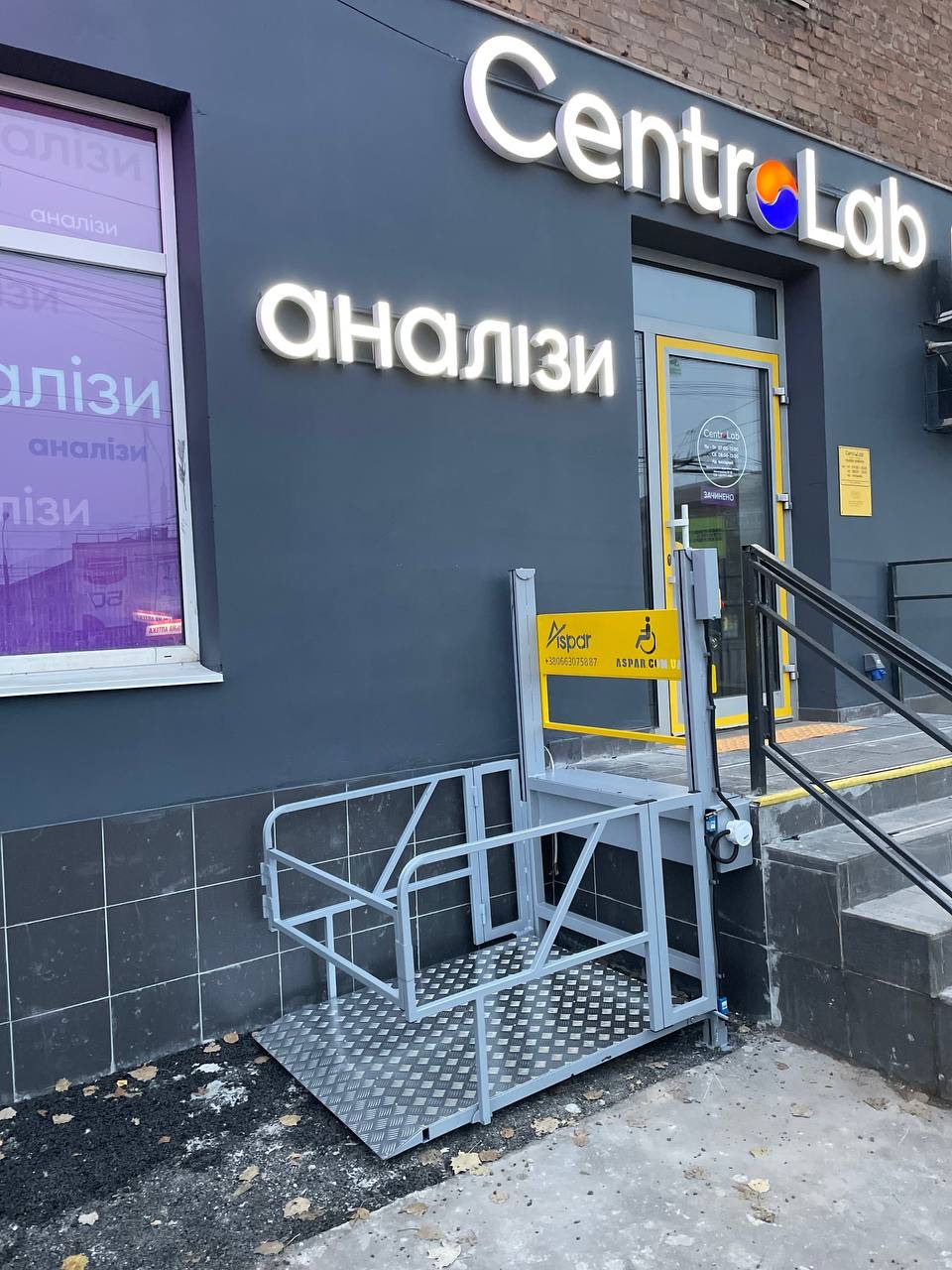
Vertical platform lift for a medical laboratory in Kryvyi Rih
A vertical platform lift was installed for an accessible route at a medical facility in Kryvyi Rih. The equipment configuration is determined by the conditions of each site.
View the projectIntegration and site preparation
Before calculation, the route, landings, guarding, operating zones, fixing points, power and boundaries of related work are checked.
Useful resources and services
Frequently asked questions
How are vertical and inclined platforms selected?
By height, stair geometry, landings and available space.
Can outdoor installation be considered?
That option is assessed separately for the conditions of the specific facility.
Which data are needed for assessment?
Route photos or a plan, basic dimensions, operating conditions and building constraints.
Which lift is suitable for moving hospital stretchers?
For routes involving hospital stretchers, a scissor, vertical or shaft-based execution is considered according to the travel route and building architecture. Selection requires details of the route, level changes, available space and integration conditions.
ASPAR equipment for hospital routes
A stretcher route and a visitor-access route are assessed separately from the actual movement pattern and building conditions.
- For a hospital stretcher route: Scissor lift for hospital stretchers, Vertical hospital stretcher lift or Hoistway hospital stretcher lift.
- For a visitor-access route: Cable-driven vertical platform lift, Chain-driven vertical platform lift, Hydraulic vertical platform lift or Scissor platform lift for accessibility.
Need a solution for a medical facility?
Send the route and installation-zone data. ASPAR will review them and propose a technical direction.