Discuss maintenance: +380 66 307 58 87
A goods lift connects working levels in a warehouse or production facility. When it is unavailable, more than the platform stops: pallets accumulate, trolley routes change and subsequent operations are delayed. The owner’s task is to organise use, reporting and servicing before an urgent fault call becomes necessary.
This article explains how to organise goods lift maintenance. Technical tasks, service intervals and permission to operate depend on the documentation for the specific equipment and professional assessment. It is not a repair manual.
1. Assign responsibility and a clear reporting route
Warehouse staff should know who receives observations, contacts the service provider and passes information to the next shift. Appoint a primary contact and a replacement. Keep the service contact and reporting procedure with the operating documents.
Staff need instructions for the actual equipment installed, including permitted loads, operating procedures and what to do if something changes. A goods lift that is not designed to carry people must not be used to transport a worker accompanying the load.
2. Keep one equipment file for each lift
- Manufacturer details, equipment identification and installation location.
- Available equipment passport, operating instructions and handover documents.
- Agreed load parameters and operating pattern.
- Records of previous inspections, repairs and component replacements.
- Details of the responsible person and service provider.
If documents are missing, say so in your enquiry. A photograph of an accessible manufacturer’s plate and an overall view can help identify the equipment. Do not remove guards or enter a hazardous area to take photographs.
3. Plan servicing around actual operations
A single maintenance interval for every goods platform would be inappropriate. Drive type, documentation, condition, cycle frequency, dust, moisture and other conditions matter. Tell the service provider about warehouse shifts and peak periods.
For a planned visit, agree an access window, an on-site contact and how goods will be handled while work takes place. Any alternative route must be agreed and safe; do not improvise another way of lifting loads when the lift is out of use.
The scope of ASPAR technical maintenance is determined after reviewing the equipment and conditions. It may include diagnostics and checks of mechanical parts, electrical systems, controls and safety components. The actual task list is agreed individually.
4. Keep a short observation log
A note saying “not working” does little to prepare a service visit. Record the date, stopping level, operation when the problem occurred, any message on the normal display and the circumstances. Also note changes to the load, frequency of use or warehouse conditions.
- What was observed: an unusual sound, a jolt, visible leakage, damage or an error message.
- When it happened: during loading, movement or unloading.
- Who contacted the service provider and what next step was agreed.
- What work was completed and what recommendations followed the visit.
Record only what can be observed from the permitted working area. Do not repeat starts to recreate a fault for a video.
5. Distinguish planned maintenance from repair
If there are signs of a fault or damaged guarding, stop using the equipment as instructed in its operating documentation and inform the responsible person. Prevent further use until a professional assessment has taken place. Do not bypass interlocks, adjust components or open electrical cabinets yourself.
Report an existing fault as a lifting equipment repair enquiry, rather than an ordinary planned inspection. Return the lift to service according to its documentation and the procedure established by the responsible specialists.
Why the installation matters
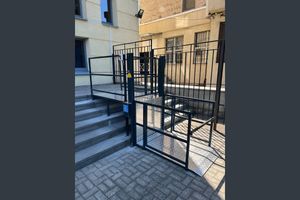
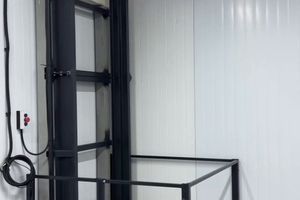
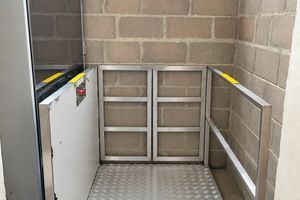
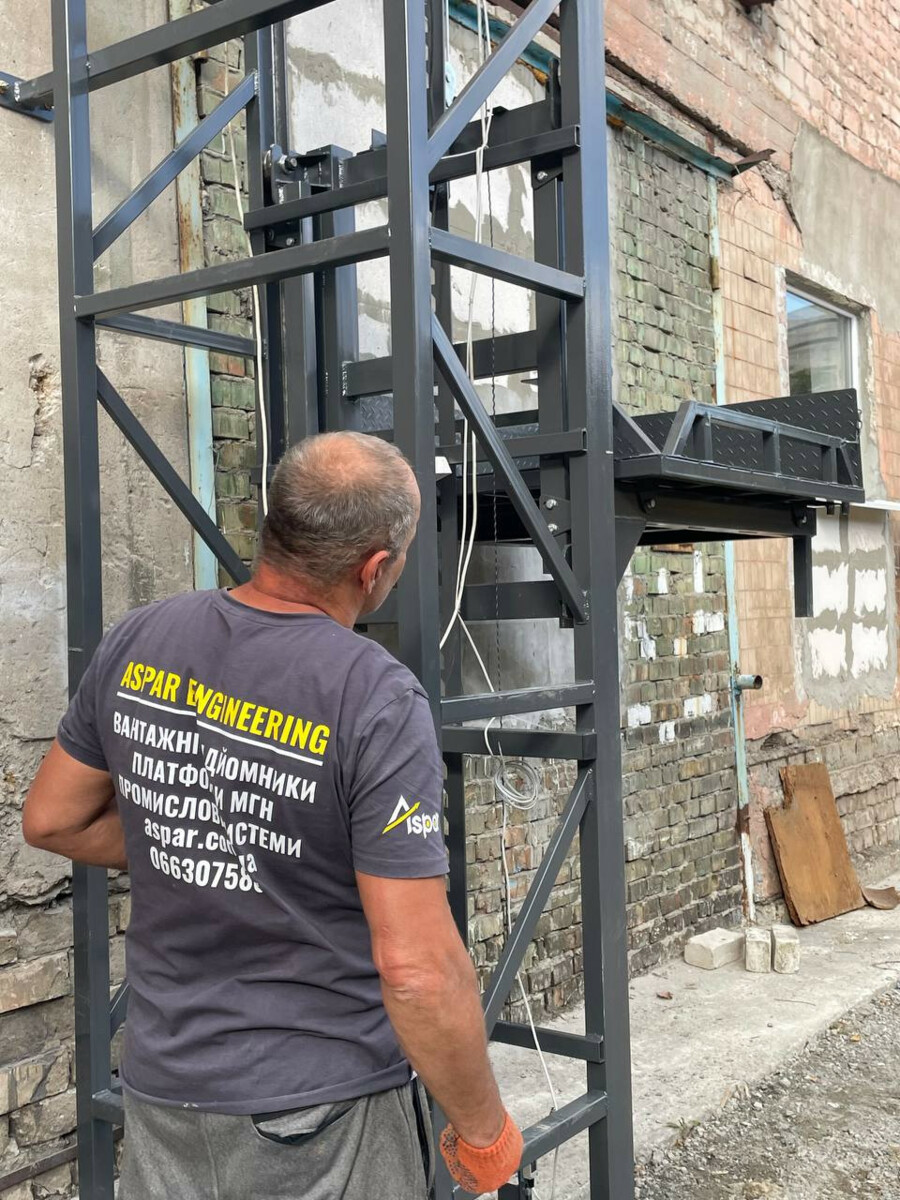
In a completed ASPAR warehouse project in Kyiv, an electromechanical goods lift moves palletised loads between levels. The photograph below shows an ASPAR worker beside lifting equipment on site.
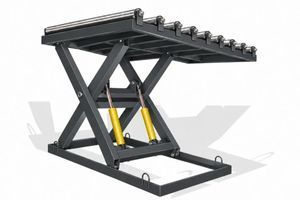
A different design, such as a hydraulic shaft goods lift, requires assessment of its own components and documentation. Do not transfer a task list from one equipment type to another. Review the goods lift range and warehouse and logistics solutions if the production route itself is changing.
What to send ASPAR with a service enquiry
Provide the city and installation location, manufacturer and lift type, available documentation, operating pattern and service history. Add a description of observations, photographs taken safely and the responsible person’s contact details. For planned maintenance, suggest an access window; for a fault, clearly describe the current condition.
Frequently asked questions
How often should a goods lift be serviced?
The interval is determined for the particular equipment using its documentation, condition and operating environment. One universal schedule does not suit every warehouse.
Can staff observations replace a technical inspection?
No. Staff reports help identify changes promptly, but do not replace agreed professional maintenance and checks.
Can ASPAR consider equipment from another manufacturer?
ASPAR considers servicing third-party equipment after assessing technical feasibility. Manufacturer details, photographs and available documentation are needed first.
Can a service price be confirmed without reviewing documents?
A justified quotation requires information about equipment type, condition, location and the required scope. There is no single price for every lift.
Arrange servicing before the next peak period
Start with the equipment file, a responsible contact and a short description of the operating pattern. These details make it possible to discuss the maintenance scope and next steps productively.