
ASPAR
Lifting equipment for service workshops, dealerships and spare-parts warehouses
A spare-parts warehouse, vehicle dealership and service workshop have different goods-handling routes, from receiving pallets to supplying parts from a mezzanine. Equipment selection should reflect the largest load, loading method and frequency of movement. ASPAR can help connect these areas without unnecessary duplication of equipment.
Moving parts between floors and storage levels
Goods lifts may be considered for boxes, wheels, components and loaded trolleys. Platform dimensions, stops and loading directions come first; the structure and drive are then selected for the task.
Explore the equipment: Goods lifts.
Vertical, shaft or mast construction
An existing shaft, space beside a floor opening, fixing points and load dimensions influence the structure. A larger platform may need a different arrangement of supports and guides. This must be checked against the building layout, not just the required capacity.
Explore the equipment: Vertical goods lifts, Shaft goods lifts, Mast goods lifts.
Explore the equipment: Hydraulic vertical goods lift, Chain-driven vertical goods lift, Wire-rope hoist shaft goods lift.
Hydraulic, chain and wire-rope hoist drives are not automatically tied to a single construction type. The configuration is agreed for the specific load and operating conditions.
Small parts and a suitable working height
Boxes and consumables
For small batches of parts moving between floors, consider a service lift. Container size, loading height and whether a trolley must enter will help determine the configuration.
Explore the equipment: Small service lifts, Goods service lifts, Goods service lift.
Raising loads in the picking area
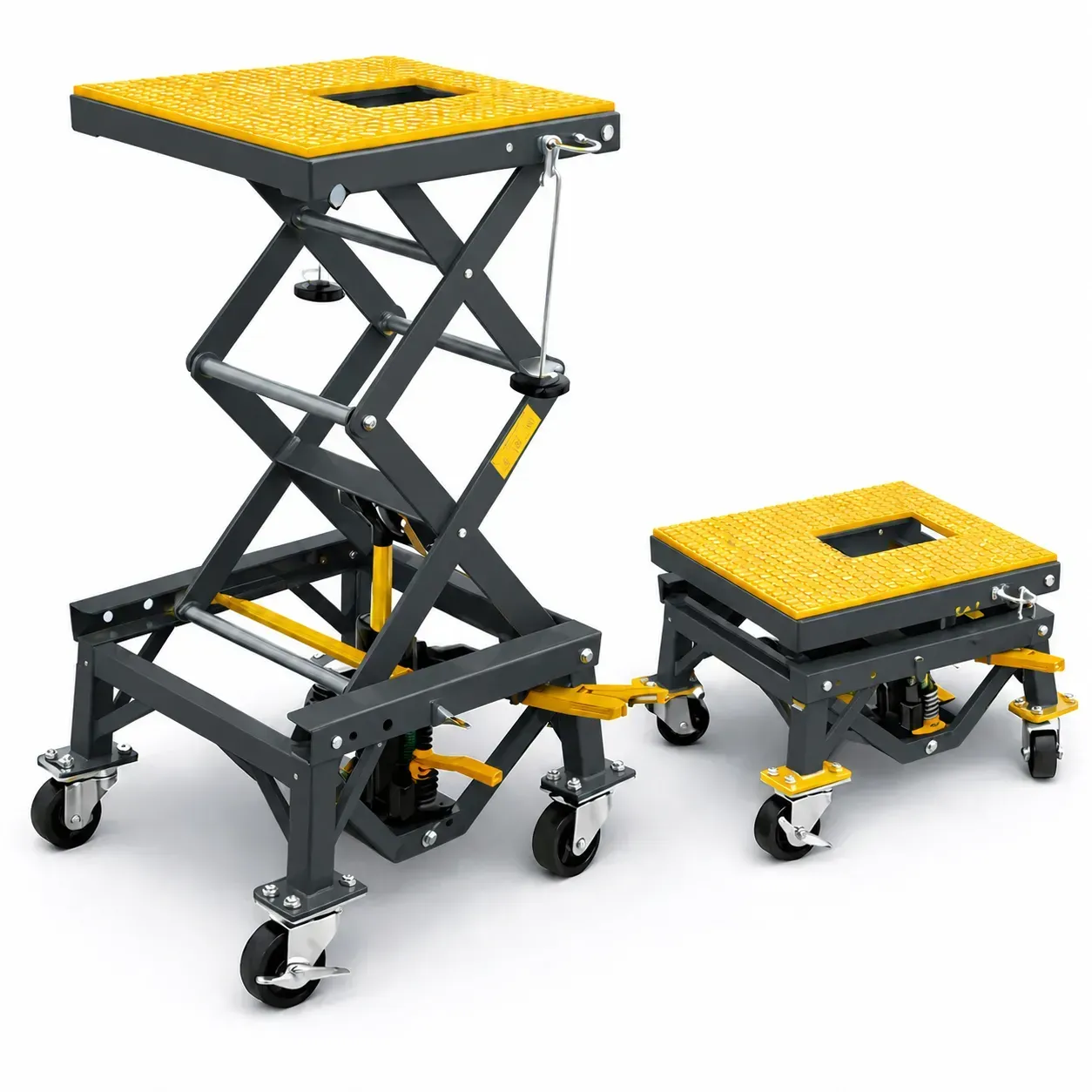
A scissor table raises a load to the required working level. A multi-scissor design may be considered for greater travel; a mobile table may suit a task where the working position changes. These are not automotive workshop lifts for raising vehicles.
Explore the equipment: Standard scissor lift tables, Multi-scissor lift tables, Mobile scissor lift tables, Scissor lift table.
Pallets and transfer to a handling line
Pallet handling requires a suitable loading method and compatibility with the trolley. Where a roller section is already installed, assess a roller-conveyor table, transfer direction and integration with existing equipment. A tandem design for a long load requires separate assessment.
Explore the equipment: Pallet lift tables, Scissor lift tables with roller conveyors, Tandem scissor lift tables, Roller-conveyor lift table.
Receiving deliveries and dispatching goods
At a large spare-parts warehouse, the interface between the truck bed and warehouse floor needs its own assessment. Dock equipment selection depends on vehicle access, dock height, vehicle types and handling equipment. A dock leveller may suit a fixed dock; a mobile ramp may suit an appropriate site without a permanent dock.
Explore the equipment: Dock equipment, Built-in hydraulic dock leveller, Mobile loading ramp with a horizontal platform.
Related solution: Warehouses and logistics.
Customer-area accessibility
Equipment for the showroom entrance, reception or customer area is selected separately from goods-handling equipment. Depending on the stairs and level difference, consider a vertical or inclined accessibility platform, or an access ramp. A goods lift does not replace equipment intended to carry a person.
Explore the equipment: Vertical accessibility platforms, Inclined accessibility platforms, Access ramps.
Examples of scissor table configurations
Explore the equipment: Tandem scissor lift table, U-shaped pallet lift table, Mobile scissor lift table.
The load, required travel and loading method determine the appropriate configuration.
Information needed for selection
- A layout of receiving, storage, mezzanine and working areas.
- The largest load’s weight and dimensions, including its container and trolley.
- Height between levels, number of stops and loading directions.
- Photos, passage dimensions and information about a shaft or fixing points.
- Movements per shift, available power supply and the method of presenting the load.
- For the dock area: vehicles, handling equipment and level difference.
Capacity, travel, platform and options must be considered together. A change in one parameter may affect the structure and installation location.
Frequently asked questions
Is this equipment for raising vehicles during repairs?
This page covers spare parts and operational goods. Raising a vehicle for repair requires equipment intended for that purpose and is not automatically included.
What load capacity should be selected?
Include the maximum weight of the load, its packaging and trolley. The required capacity is agreed through a project-specific calculation alongside platform dimensions, travel and operating conditions.
Can a lift be installed in an existing warehouse?
Feasibility is assessed using photos, dimensions and information about the building structure. Space, fixings, loading, guarding and maintenance access must be checked.
Select equipment for your spare-parts warehouse
Send the route layout and details of the largest load. ASPAR will clarify the information needed for selection and calculation.