


|
Quantity
|
Total
|
||
|
|
|||
Individual price calculation. The final price depends on the configuration, dock-area parameters, vehicles and installation conditions.
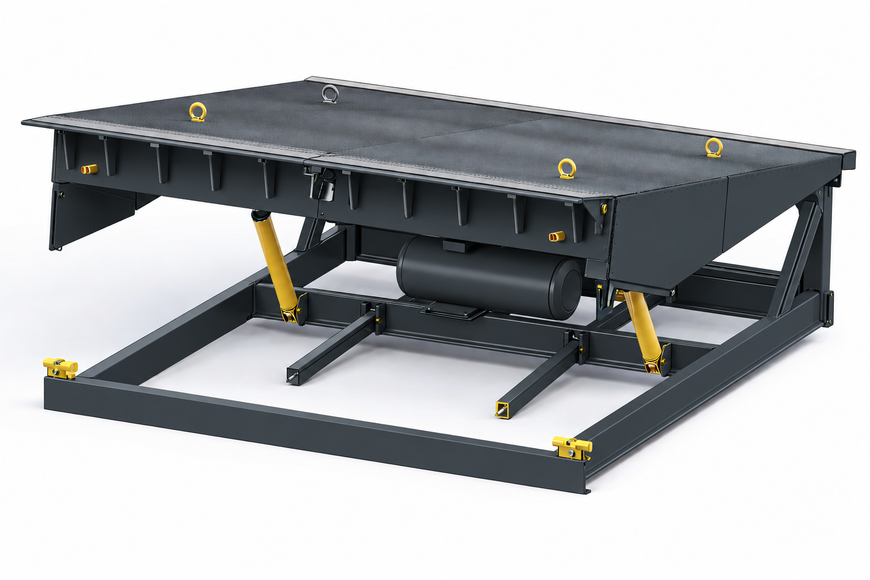
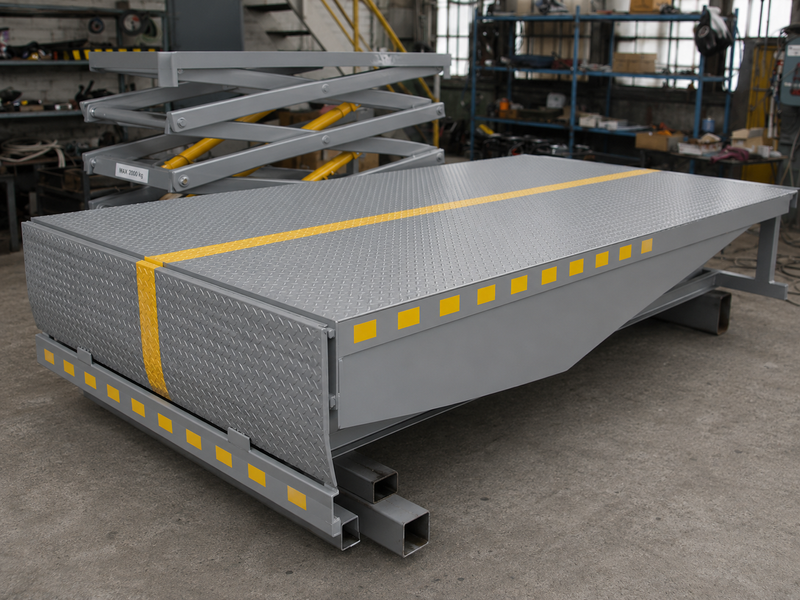
The ASPAR recessed electrohydraulic dock leveler is fixed dock equipment for bridging the height difference between a warehouse dock and a vehicle body during loading or unloading. It is integrated into a permanent loading area; the final configuration is selected for the dock geometry, vehicles and operating scenario.
6-tonne dock leveler specifications
Parameters for this configuration. The final specification is agreed for the dock geometry, vehicles and loading process.
Key specifications
| Load capacity | 6000 kg |
|---|---|
| Installation | Built-in, fixed loading dock |
| Drive | Electrohydraulic |
| Power supply | 380 V |
| Control | Push-button control |
Operating range
| Platform rise | +350 mm |
|---|---|
| Platform lowering | −300 mm |
| Platform dimensions | Agreed to suit the dock area and vehicles |
Site-specific requirements
| Dock and installation | Pit or opening dimensions, integration location and readiness for connection |
|---|---|
| Vehicles and loads | Vehicle-deck heights, expected load and warehouse equipment |
| Workflow | Available space, vehicle and load movements and loading method |
Where a dock leveler is used
A dock leveler is used at warehouses, logistics centres, production facilities and distribution/loading areas with a permanent vehicle-handling point. It helps organise the transition between the dock and vehicle within a specific loading bay.
When a fixed dock leveler is appropriate
A dock leveler is considered for a fixed loading point with recurring loading and unloading operations. Selection depends on the level difference between the dock and vehicle, the load-handling method, available space, vehicles served and the ability to integrate equipment into the loading bay.
Dock leveler, loading ramp or ramp with a horizontal platform: which solution to consider
- A dock leveler is a fixed solution integrated into a loading dock.
- A mobile loading ramp for a scenario without a fixed dock.
- A mobile ramp with a horizontal working platform.
The decision is driven not by the equipment name but by the loading process, vehicle flow and site geometry.
Information required for selection
To develop a solution, provide the dimensions of the dock area and pit or opening where applicable, the range of vehicle-deck heights, expected load, load-handling method, warehouse equipment in use, vehicle-flow scenario, available installation space, and site readiness for installation and connection.
Technical characteristics and configuration
The specification table shows the parameters of the specific model. They should be assessed together with the dock and vehicle data: the key issue is fit with the real loading operation, not an isolated figure.
Preparation and installation
Before manufacture and installation, the integration location, source dimensions, load movement, equipment access and interaction with adjacent processes are agreed. ASPAR reviews the site data to define the configuration and installation requirements.
Related solutions and service
Related products and material
Frequently asked questions
When is a dock leveler needed?
A dock leveler is considered when a fixed dock must regularly bridge the height difference between a warehouse dock and a vehicle during loading operations.
What information is needed for a quotation?
Provide the dock, vehicle and load parameters, warehouse-equipment workflow, available space and site integration conditions.
How does a dock leveler differ from a mobile ramp?
A dock leveler is integrated into a fixed loading dock. Mobile loading ramps and mobile ramps with a horizontal platform serve different loading-process scenarios.
What needs to be agreed before installation?
Before installation, agree the source dimensions, integration location, movement of loads and equipment, dock readiness and connection conditions.
How is a solution selected for particular vehicles?
Selection considers vehicle-deck heights, vehicle types, the loading scenario, load and equipment operating in the dock area.