
|
Quantity
|
Total
|
||
|
|
|||
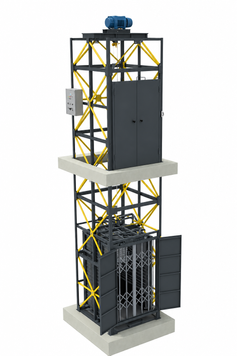
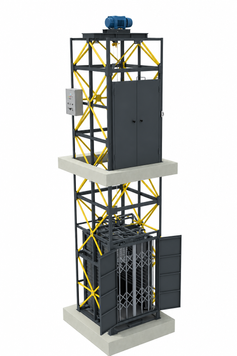
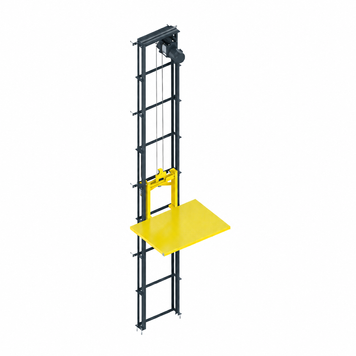
Shaft Freight Lifts
Shaft freight lifts move goods between floors within an enclosed building hoistway. A shaft installation describes how the lift is installed; the drive and structure are selected separately for the load, route and site conditions.
Types and Specifications of Shaft Freight Lifts
The range of shaft freight lifts includes various models:
- Load capacity: determined for the specific configuration by the technical brief and engineering calculation.
- Lifting height: The lifting height is determined for your site according to the agreed technical requirements and engineering calculations.
- Power supply: the hydraulic and wire-rope lift cards specify 380 V; the shaft platform lists 230 V single-phase or 400 V three-phase, depending on configuration. Connection requirements are agreed for the selected configuration.
- Mechanism: Hydraulic, wire-rope electric hoist or chain drive depending on the project; compatibility with the structure is determined by engineering calculations.
- Dimensions: platform, shaft and opening dimensions are matched to the load dimensions and installation conditions.
- Materials: materials, coatings, guarding and doors are selected for the specific site conditions.
Applications of Shaft Freight Lifts
Shaft freight lifts are considered for inter-floor goods movement at the following sites; installation feasibility and specifications are determined by the project:
- warehouse and logistics complexes;
- manufacturing workshops;
- construction sites and high-rise buildings;
- repair and service areas;
- facilities requiring vertical movement of goods in enclosed shafts.
Who Uses Shaft Freight Lifts
- warehouse and logistics enterprises;
- manufacturing companies;
- construction companies;
- service and municipal operations;
- agricultural and industrial facilities with vertical load lifting.
How to Choose a Shaft Freight Lift
- load weight including its container or trolley, dimensions and load centre position;
- height between levels, number of stops and loading directions;
- shaft, opening and installation-area dimensions, a site plan or photographs;
- operating regime, temperature conditions and available power supply;
- requirements for doors, guarding, controls and maintenance access.
Packaging, delivery, unloading and the installation sequence are agreed with regard to equipment dimensions and access to the installation area.
Frequently Asked Questions
What is the maximum load capacity?
The hydraulic and wire-rope electric-hoist series list configurations rated at 500, 1000, 2000, 3000, 5000 kg and higher by individual engineering calculation. Load capacity and the permitted combination of travel, dimensions and other parameters are confirmed for the specific project.
Is power supply required?
Yes. Voltage, phase and connection requirements are checked against the selected model specifications and agreed project design.
Can they be used outdoors?
Outdoor installation is assessed for the specific project, considering temperature, moisture, environmental conditions, equipment protection and maintenance access. An anti-corrosion coating alone does not establish suitability.
Is maintenance required?
Yes. Inspection intervals and maintenance tasks follow the operating documentation for the specific lift.
A World Without Barriers with Aspar
ASPAR provides engineering-based selection, manufacture, installation and servicing of shaft goods lifts. The agreed configuration is determined by the load, route and site conditions.
Read more: how to prepare a shaft for a freight lift and what to compare in shaft and mast freight lifts.
ASPAR equipment in this category
Choose the equipment type for the route, load and site conditions.